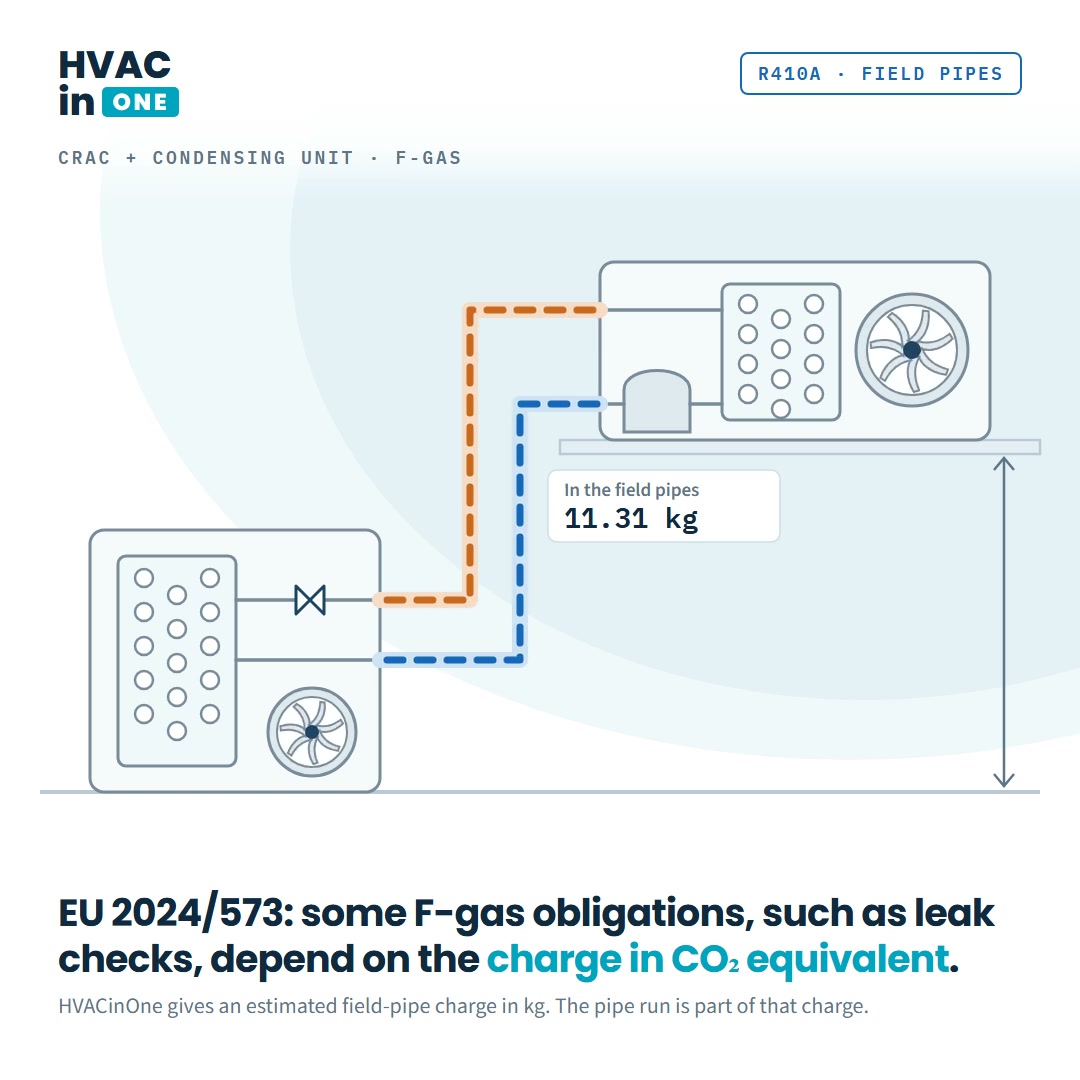
What is the refrigerant charge of this unit, per circuit? Today the answer often comes only when the first unit is charged. But under EU 2024/573, some F-gas obligations, such as leak checks, depend on the charge in CO₂ equivalent. So the charge matters before the unit is built.
HVACinOne estimates the refrigerant charge in kg per circuit, inside the selection. The cycle is solved, and each part gets its own charge row. The condenser and evaporator coils come from the in-house coil model, with tubes and bends. Each line is filled at its own solved state: liquid, gas or two-phase. Pipes and line parts with a volume, such as the filter drier, are counted. The compressor charge is the gas in the shell and in the oil, from the model's data. The rows add up to the circuit total. Coil headers and the distributor are not included.
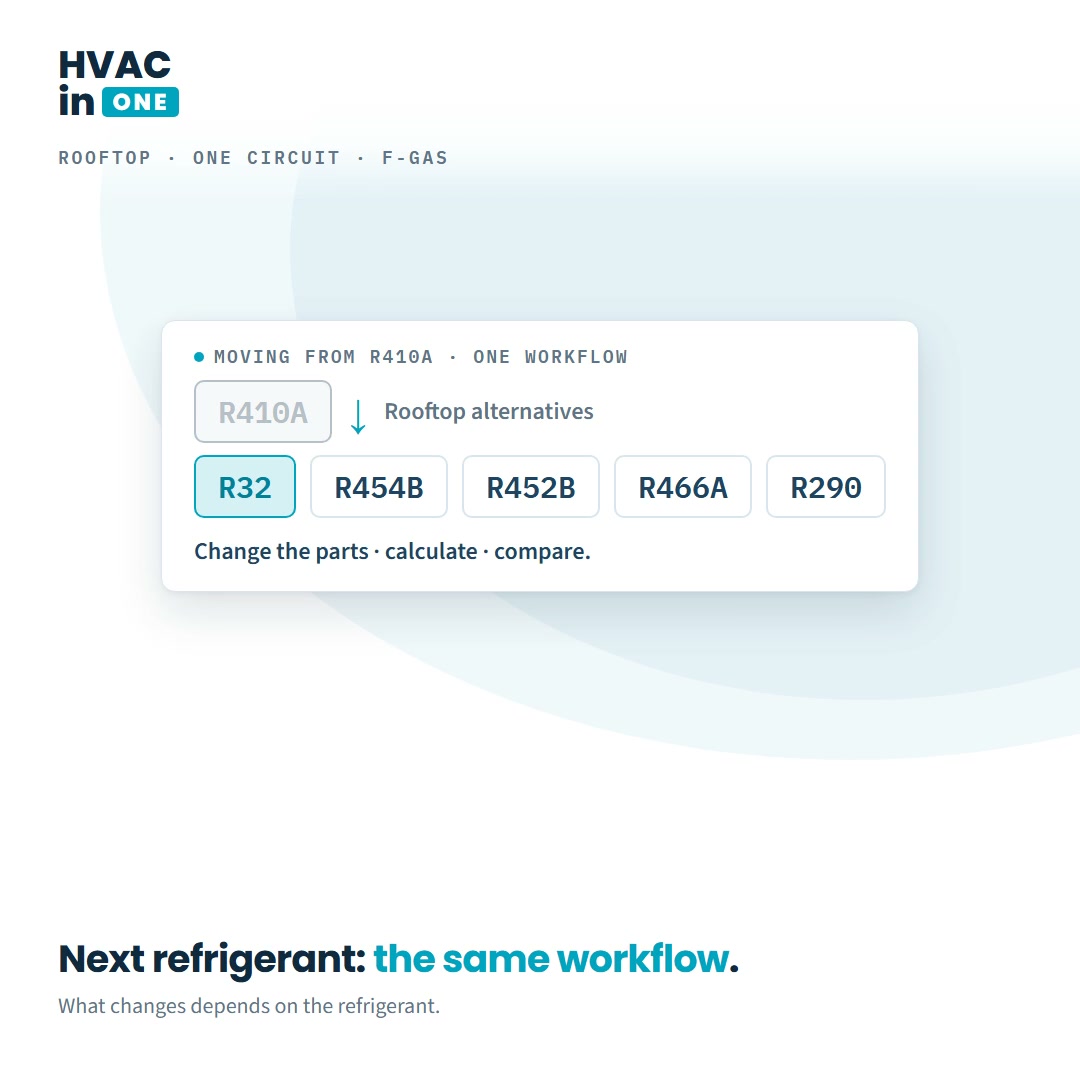
Take one rooftop circuit with R410A at 6000 m³/h and 35 °C outdoor. The condenser coil holds the most, 3.99 kg. The evaporator coil holds 0.72 kg, the lines 0.76 kg and the compressor 0.77 kg. Together this gives an estimated 6.24 kg per circuit. HVACinOne also flags that this total is above the selected compressor's 5.9 kg charge limit.
This helps R&D, product and technical sales teams see the charge early, find which part holds most of it, and check it against the compressor before the first unit is built. All values come from the same selection calculation. They are estimates by calculation, not measurements.